






The Powerful Graphics Cards for Gaming and Design 2026
21 September 2026
Choosing a graphics card in 2026 can be more complex than it was a few years ago. Not only do we have more models and different ranges, but we are also playing the availability game.
The generational leap from NVIDIA, AMD and Intel Arc has brought more powerful, efficient GPUs aimed at both high-performance gaming and professional 3D design. With the arrival of technologies, new GDDR7 memories or architectures such as Ada Lovelace or RDNA 4, the market has diversified enormously.
At Probyte we help you understand which models stand out in 2026 and how to choose the right GPU according to your profile: competitive gamer, content creator, 3D designer or hybrid user.
Below we start with the key factors for choosing the perfect graphics card this year.
How to choose a powerful graphics card in 2026
Choosing the right GPU is not just about looking at raw power. As we have said, nowadays variables such as performance per watt, compatibility with upscaling technologies, the type of memory (GDDR6X or GDDR7), power consumption and, above all, the main use you are going to give it come into play.
Key performance factors (VRAM, CUDA cores, frequency and architecture)
When comparing graphics cards, these are the elements that really make the difference:
VRAM and bandwidth
-
For 1080p / 1440p gaming, 8–12 GB is usually enough.
-
For 4K, 3D design or software such as Blender, Premiere Pro and DaVinci Resolve, 16 GB or more is recommended.
-
In 2026, GDDR7 memory appears, present in top-of-the-range GPUs such as the RTX 5090, which drastically improves speed and performance in heavy tasks.
Architecture and cores
In this sense we have Ada Lovelace (NVIDIA) and RDNA 4 (AMD), which offer significant leaps in ray tracing and efficiency.
CUDA cores, RT cores (ray tracing) and Tensor cores (AI) in NVIDIA remain key for gaming and accelerated content creation.
AMD improves its performance per watt with RDNA 4 and a more mature FSR 3.
Upscaling and AI technologies
DLSS 3 makes it possible to increase FPS in demanding titles such as Cyberpunk 2077 or Hogwarts Legacy.
FSR 3 works on a wider range of cards, including NVIDIA and AMD.
For creators, optimised Studio / Pro drivers offer stability in rendering and editing software.
Consumption and energy efficiency
Performance per watt is a key criterion in 2026.
-
RTX 50 cards with Ada Lovelace Next architecture offer better efficiency despite their extreme power.
-
Recommended power supplies usually start at 750W, going up to 1000W for configurations with processors such as the Ryzen 7 7700X or Intel i7-14700K.
Differences between cards for gaming and professional design
Usage radically conditions the choice. Let's look at each case individually:
For gaming
-
The most relevant factors are clock speed, FPS performance at 1440p and 4K, and support for ray tracing + DLSS 3 / FSR 3.
-
Popular models in 2026: RTX 5080, RTX 4070 Super, RX 8800 XT, RX 7800 XT.
-
For 144 Hz or ultrawide monitors, rasterisation power is key.
For 3D design and audiovisual production
Here VRAM, driver stability and the ability to accelerate tasks in Blender, Unreal Engine, Premiere Pro or DaVinci Resolve are fundamental.
High-end cards such as the RTX 5090 or RX 8900 XT stand out in GPU rendering, simulations and complex projects.
Compatibility with generative AI workflows is also a new factor to take into account in 2026.
Compatibility with 4K, 8K and VR monitors
Nowadays more users are making the leap to 4K, ultrawide or even 8K screens, so the GPU must be prepared:
-
4K gaming: a high-end GPU is required (RTX 5080+, RX 8800 XT+, top-of-the-range Arc Battlemage).
-
8K: only the RTX 5090 and the best RDNA 4 cards can handle it smoothly using DLSS/FSR.
-
Virtual Reality (VR): the refresh rate is critical; GPUs with good efficiency and low latency offer better results.
In addition, the new DisplayPort 2.1 and HDMI 2.1 interfaces allow greater bandwidth for 240 Hz 4K monitors and ultra-wide design panels.
Best NVIDIA graphics cards 2026
The best NVIDIA graphics cards of 2026 once again lead the market thanks to the new generation based on the Ada Lovelace Next architecture, improvements in DLSS 3.5, greater efficiency and performance per watt far superior to previous generations. Both for gamers and for professional creators with RTX Studio certification, these GPUs mark the way forward in 2026.
NVIDIA GeForce RTX 5090 — the queen of 4K performance
The RTX 5090 is, without question, the most powerful GPU of 2026. Designed to run games such as Cyberpunk 2077 or Hogwarts Legacy above 120 FPS in 4K, it combines:
-
Ultra-fast GDDR7 memory.
-
Drastic improvements in ray tracing.
-
DLSS 3.5 with frame generation and enhanced reconstruction.
Its performance per watt is better than the 4090, and for creators it multiplies the speed in 3D rendering, generative AI and workflows in Unreal Engine or Blender.
NVIDIA GeForce RTX 5080 — power and efficiency for gaming
The RTX 5080 is the interesting option for those who value very extreme performance without reaching the cost of the 5090.
It offers:
-
Excellent FPS at 4K and 1440p.
-
Moderate power consumption that stands out for its energy efficiency.
-
Great scaling with DLSS 3.5.
It is a very balanced card for gaming with ray tracing enabled and maintaining high levels of smoothness.
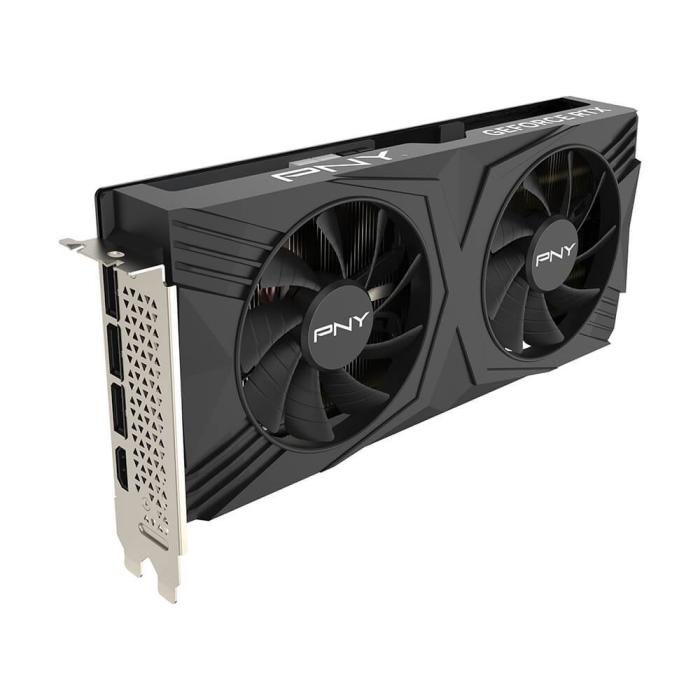
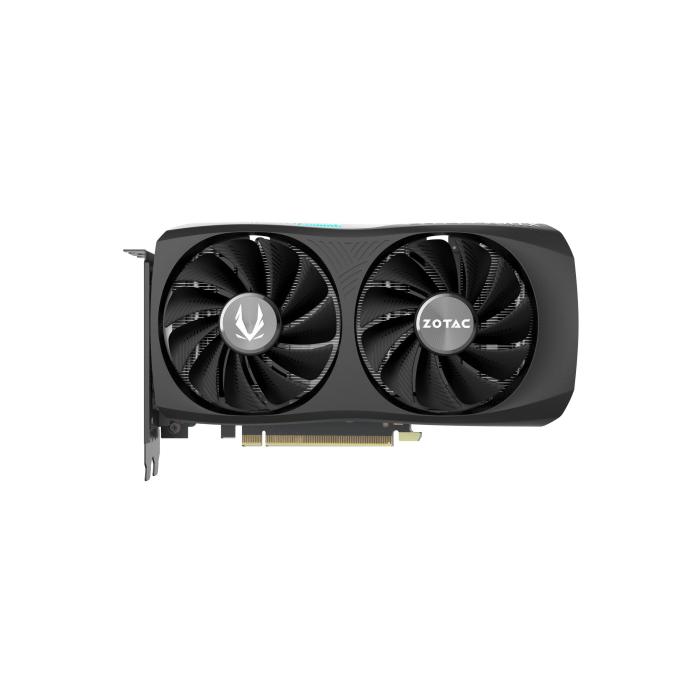
NVIDIA RTX 4070 Super — balance between price and FPS
The RTX 4070 Super is still in 2026 one of the most interesting options for 1440p gaming.
It stands out for:
-
Excellent performance per watt.
-
DLSS 3.5 to increase FPS in demanding games.
-
Good compatibility with 144 Hz and ultrawide monitors.
If you are looking for a real balance between investment and performance, it is one of the market references.
Recommended models for creators: RTX 4080 Super and RTX 4060 Ti
In the professional environment, RTX Studio GPUs still have an advantage due to stability and optimisation.
RTX 4080 Super
Ideal for:
-
Accelerated GPU rendering.
-
Heavy work with Premiere Pro, DaVinci Resolve or Blender.
-
Workflow with generative AI.
It offers an excellent power/stability ratio.
RTX 4060 Ti
An accessible option for creators who are just starting out:
-
Low power consumption.
-
Optimised Studio drivers.
-
Good performance in video editing and light 3D projects
Best AMD graphics cards in 2026
AMD arrives in 2026 very strong with its consolidated RDNA 3 architecture and the progressive improvement of technologies such as FSR 3 and Adrenalin drivers, which in this generation stand out for their stability. The best AMD graphics cards 2026 are particularly well positioned in terms of value for money.
AMD Radeon RX 7900 XT — high-end performance for 4K
The RX 7900 XT is one of the most complete high-end GPUs currently available.
It offers:
-
Very good 4K performance without the need for an extreme budget.
-
Great rasterisation performance and good compatibility with FSR 3.
-
20 GB of VRAM, perfect for heavy games and content creation projects.
A solid alternative to the RTX 4080/5080 series depending on the price at the time.
AMD Radeon RX 7800 XT — excellent value-for-money option for 1440p
If you are looking for the best balance between performance and cost, the RX 7800 XT is one of the stars of the AMD catalogue.
Advantages:
-
Excellent 1440p performance, even with high settings.
-
Moderate power consumption and efficient cooling.
-
Competitive price within the upper mid-range.
It is an ideal graphics card for gamers who want power without going for the ultra range.
AMD Radeon RX 7700 XT — ideal for 1440p or 1080p with headroom
The RX 7700 XT stands out as an accessible and very well-balanced option.
It offers:
-
Very good 1440p performance.
-
Plenty of headroom at 1080p for playing on high or ultra quality.
-
Adrenalin drivers that improve FPS and latency in competitive games such as Fortnite or Apex Legends.
A perfect option for tighter budgets.
AMD vs NVIDIA comparison: which performs better in 2025?
The battle between AMD and NVIDIA in 2025 depends heavily on budget and type of use. Here is a clear summary:
|
Aspect |
NVIDIA (Ada Lovelace / Ada Next) |
AMD (RDNA 3 / RDNA 4) |
|
Rasterisation performance |
Excellent, especially in high ranges (RTX 5080–5090) |
Very competitive, especially at 1440p. RX 7800 XT and RX 7900 XT stand out. |
|
Ray Tracing performance |
Superior: dedicated RT cores + DLSS 3.5 |
Decent, but inferior in demanding ray tracing titles. |
|
Upscaling technologies |
DLSS 3.5 with Frame Generation and advanced reconstruction |
FSR 3, compatible with more cards but with more variable quality. |
|
1080p / 1440p performance |
Very high even in mid-range tiers (RTX 4070 Super) |
Excellent performance/price ratio. Dominates the mid-range. |
|
4K performance |
Absolute leadership with RTX 5080/5090 |
Competitive, but somewhat behind in demanding 4K. |
|
Professional use (design, rendering, AI) |
Best option: Studio drivers, CUDA, Tensor Cores |
Good performance, but less professional optimisation. |
|
VR and 8K |
RTX 5090/5080 offer low latency and outstanding power |
Good performance, but not as strong in VR or 8K. |
|
Power efficiency |
Leads the market, great performance per watt |
Improvements with RDNA 4; good efficiency but inferior to NVIDIA. |
|
Drivers and stability |
NVIDIA Studio + Game Ready: very stable |
Adrenalin: excellent gaming performance and continuous updates. |
|
Price / Value |
Higher prices, especially in the high-end range |
Better value for money, especially at 1440p. |
|
Ideal for… |
4K gaming, VR, 3D design, generative AI, professional creators |
1440p gaming, tight budgets, users looking for maximum value. |
Graphics card trends in 2025 and 2026
The GPU sector is undergoing one of its most profound changes since the arrival of real-time Ray Tracing.
AI and assisted rendering: the new frontier of GPU computing
The integration of generative AI into render engines and video editors is radically changing workflows:
-
Real-time AI acceleration for rotoscoping, upscaling and automatic removals.
-
Generation of textures, animations and materials using AI models.
-
Hybrid CPU–GPU–AI rendering with engines such as Cycles-X, Unreal Engine and Omniverse.
NVIDIA leads this trend with Tensor Cores and DLSS 3.5, but AMD continues to advance with FSR and software optimised for ultra-high VRAM.
Integrated GPUs in workstations and compact PCs
Compact systems are gaining ground thanks to:
-
New, more efficient GPUs
-
Mini-ITX systems with advanced cooling
-
Workstations that integrate Radeon Pro or RTX Studio in reduced sizes
This opens the door to quieter, more portable and more powerful professional PCs than ever before.
What to expect from 2026 graphics cards (Lovelace Refresh, RDNA 4.5, Battlemage)
Forecasts point to:
-
NVIDIA Lovelace Refresh / Ada Next+ → more efficiency and improvements in AI.
-
AMD RDNA 4.5 → power consumption and scaling optimisation.
-
Intel Arc Battlemage → greater driver maturity, strong entry into the mid-range.
The market is heading towards more efficient GPUs, with more VRAM and a leading role for AI in gaming and design.
Which powerful graphics card should you choose in 2025 and 2026? Decision table
We have condensed everything we have analysed so far into a table to make your decision easier:
|
Use / Need |
Mid-Range |
Mid-High Range |
High-End / Top of the Range |
|
1080p Gaming / eSports |
RTX 4060 / RX 7600 |
RTX 4070 Super / RX 7700 XT |
RTX 5080 / RX 8800 XT |
|
1440p Gaming, high quality |
RTX 4060 Ti / RX 7700 XT |
RTX 4070 Super / RX 7800 XT |
RTX 5080 / RTX 5090 |
|
4K Gaming / Ray Tracing |
— |
RTX 4070 Super / RX 7800 XT (with scaling) |
RTX 5090 / RX 8900 XT |
|
3D Design (modelling, medium scenes) |
RTX 4060 Ti / RX 7800 XT |
RTX 4070 Super / RX 7900 XT |
RTX 4080 Super / RTX 5090 |
|
GPU Rendering / Complex simulations |
— |
RX 7900 XT / RTX 4070 Super |
RTX 5090 / Radeon Pro W7900 |
|
1080p / light 4K video editing |
RTX 4060 Ti / RX 7600 |
RTX 4070 Super / RX 7800 XT |
RTX 4080 Super |
|
Heavy 4K editing / 8K |
— |
RX 7900 XT / RTX 4070 Super |
RTX 5090 / Radeon Pro W7900 |
|
Professional use (drivers, stability) |
— |
RTX Studio (4070S / 4080S) |
Nvidia RTX Studio 4080S–5090 / Radeon Pro W-series |
Browse our graphics card catalogue and get yours today .
Latest posts

Philips 7000/12: 43" 4K Smart TV with Wifi | Probyte
26 September 2026
Introduction The Philips 7000/12 is a 43-inch (109.2 cm) television that combines 4K Ultra HD resolution, Wifi connectivity and Smart TV features in an elegant black design. If you're looking for a
Read more
LG 27TQ615S-WZ Smart TV 27'' Full HD | Probyte Deal
26 September 2026
Looking for a compact TV with all the features of a larger model? The LG 27TQ615S-WZ packs 27 inches, Full HD, webOS and WiFi into an elegant white design for kitchens and bedrooms.
Read more
16GB vs 32GB vs 64GB RAM: which is worth it?
21 September 2026
More isn't always better: choosing the right RAM depends on how you use your PC, not just on having more capacity. The key is balancing performance, usage and future-proofing to avoid paying over the odds.
Read more